

Table of Contents
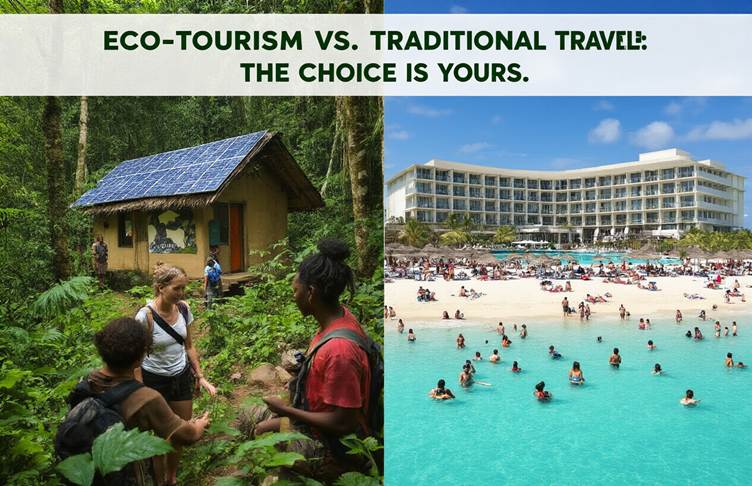
Understanding Eco-Tourism
ever found yourself holding glossy travel brochures, dreaming of a getaway but feeling a twinge of guilt about the carbon footprint behind it you’re not alone more and more travelers are caught in the eco-tourism vs traditional travel debate, torn between chasing adventure and protecting the planet.
here’s the reality: it’s not necessarily a black-and-white decision ,both traditional tourism and eco-tourism have their roles. What is important is understanding how they operate, what they affect, and what type of traveler you wish to be.
This guide provides you with the tools to cut through the clutter so you can make travel decisions that feel authentic—without relinquishing those Instagram-perfect moments you enjoy. ✨Eco-tourism is not simply a snappy buzzword—it’s an approach to viewing the world with greater sensitivity. It involves visiting natural destinations responsibly in a manner that minimizes its impact on the environment, benefits host communities, and increases awareness.
The principles are easy to follow but potent:
Reduce your footprint on the environment
Be respectful of cultures and customs
Support and promote small, community-based enterprises
Educate yourself about ecosystems and conservation
Promote awareness about sustainability
Rather than simply taking pictures and leaving, eco-travel allows you to be involved in something significant.
Bluejay Travels Tip: If you’re organizing a vacation and desire a combination of comfort and responsible traveling, we’d be happy to craft itineraries that incorporate environmentally friendly accommodations without forgoing enjoyment.
How Eco-Tourism Affects Local Communities
One of the most compelling arguments in the eco-tourism advantages and disadvantages argument is how it affects locals.
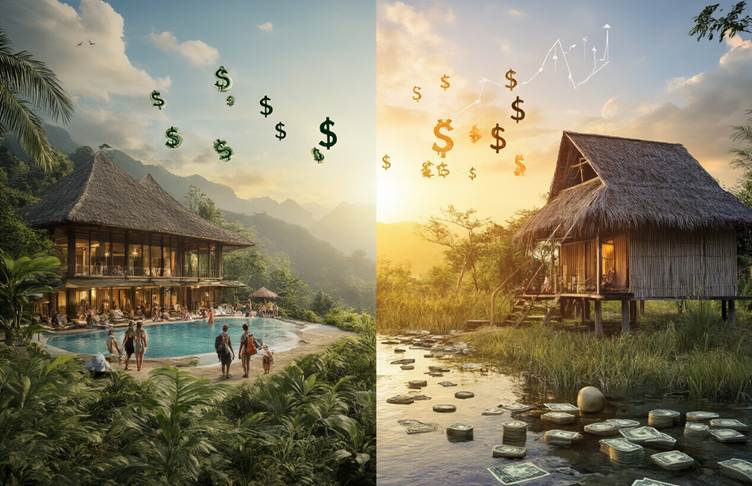
When you reside in eco-lodges, dine in family-run restaurants, or go on guided tours with residents, your funds directly benefit the community instead of going to global hotel chains.
For instance, in Costa Rica, eco-tourism has provided sustainable employment opportunities, curtailed destructive activities such as logging, and induced local pride in their traditions. Cultural heritage does not disappear but flourishes because it now has tangible worth to the younger generation.
Decreasing Environmental Impact
Eco-tourism promotes small but significant lifestyle changes while traveling:
Taking trains or buses instead of several flights
Accommodating in eco-certified accommodations that are running on renewable power
Bringing reusable bottles, bags, and cutlery
Taking tours with robust environmental policies
Participating in activities such as planting trees or cleaning beaches
We have seen solar-powered eco-lodges, composting toilet facilities, and rainwater harvesting—all demonstrating that comfort and sustainability can coexist.
Popular Eco-Tourism Destinations
If you’re curious about sustainable travel vs conventional travel, here are a few destinations leading the way:
Costa Rica – 25% of its land is protected as parks or reserves.
Palau – Visitors sign an eco-pledge stamped in their passport.
Slovenia – Ljubljana is car-free and one of Europe’s greenest cities.
Kenya – Community-run conservancies protect wildlife and empower locals.
by visiting these destinations, you’re casting a vote for a greener, more responsible travel industry.
The Traditional Travel Experience
now, let’s flip the lens to traditional tourism vs eco-tourism.
traditional travel is what most of us grew up with—large hotels, famous attractions, and easy package tours. Its strengths are hard to deny:
easy booking and ready-made itineraries
comfortable hotels and familiar dining
all-inclusive resorts where everything’s taken care of
established infrastructure with airports, shuttles, and English-speaking staff
which makes it particularly attractive for families, first-time travelers, or those desiring convenience.
Here’s the thing—traditional tourism often creates these “tourist bubbles.” You get the comfort of big hotels and packaged shows, but the trade-off is that the real cultural experience gets watered down. You’re technically there, but not really in it.
And of course, there’s the hidden cost to the planet long-haul flights pump out serious carbon emissions. resorts burn through water and energy to keep everything looking picture-perfect popular spots buckle under the weight of overtourism and then there are the wildlife attractions—like elephant rides or dolphin shows—that do more harm than good.
Eco-tourism takes a different path. It’s built on small, low-impact choices—like staying in eco-lodges, eating local, or joining conservation-based tours—that let you enjoy the destination while actually protecting it for the future.

The Cost Question
Cost is one of the most prevalent arguments in the discussion of eco-tourism advantages and disadvantages.
Eco-lodges at first glance might seem more expensive than resorts. But they typically come with experiences—such as guided tours or local meals—that regular tourists have to pay extra for.
More to the point, what your money supports is what counts. In traditional tourism, most of the money you spend leaves the local economy. With eco-tourism, up to 80% directly benefits local businesses. That’s not just green—it’s empowering.
bluejay travels insight: We can assist you in finding a balance between affordability and sustainability. If you desire an eco-stay in Costa Rica or a standard resort in Dubai, we will track down the best deals for you.
So which is better?
The thing is—neither eco-tourism nor standard travel is “wrong.” both are strong.
traditional travel offers you convenience and comfort.
eco-tourism offers you sustainability and cultural depth.
The ideal strategy? Combine both. Spend some of your time at an eco-lodge, then treat yourself to a few days of classic comfort.
In the end, responsible travel is the aim—travelling in a way that honors what you see, sustains local communities, and leaves places better than you found them
Because travel is not about where you go, but about how you be in the world. ????✈️
1. What is the primary distinction between eco-tourism and conventional travel?
eco-tourism emphasizes local influence and sustainability. Conventional tourism favors convenience, comfort, and well-liked sights.
2. What are the advantages and disadvantages of eco-tourism?
Advantages: genuine experiences, tangible benefits to the local community, reduced impact.
Disadvantages: greater initial cost, less amenity, and sometimes inaccurate “eco” labels.
3. is eco-tourism always superior to conventional tourism?
Not always. Both have their uses. It all depends on your travel objectives and priorities.
4. Is eco-tourism more expensive?
Sometimes in advance, yes—but eco-travel frequently incorporates activities and benefits locals, so it’s more satisfying in the long term.
5. Can I turn traditional tourism into eco-travel?
Yes! Stay at green-certified accommodations, dine locally, and skip ugly wildlife tours.
6. What are the best eco-tourism destinations?
Costa Rica, Slovenia, Palau, and Kenya stand out as top destinations for ecotourism.
https://shorturl.fm/7X2Lj